| 作者(Author) |
|
wangson
高級會員


註冊(Joined): 07-July-2003
所在地國家(Location): Taiwan
文章數(Posts): 2512
|
| 發表於: 16-October-2003 at 12:04am | IP Logged
|
|
|
橘點捲管螺是我取的,其實我並不知學名,uncommon至common種,應該有貝友檢過,如果有人知道中文名稱或英文學名者請告知,謝謝.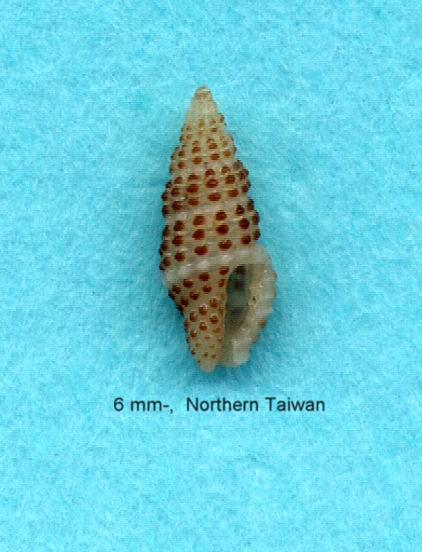
__________________
Wangson_Wang
|
| 回到本頁最上面 |


|
| |
seashell2392
高級會員

註冊(Joined): 08-July-2003
所在地國家(Location): Taiwan
文章數(Posts): 3254
|
| 發表於: 16-October-2003 at 8:58pm | IP Logged
|
|
|
他的學名是Kermia pustulosa (de Folin,1867).
__________________
追求理想和真理,得到了內心的自由和安寧.
http://shells.tw/~seashell2392/index.htm
|
| 回到本頁最上面 |

|
| |
wangson
高級會員
註冊(Joined): 07-July-2003
所在地國家(Location): Taiwan
文章數(Posts): 2512
|
| 發表於: 16-October-2003 at 11:26pm | IP Logged
|
|
|
謝謝 to seashell2392
__________________
Wangson_Wang
|
| 回到本頁最上面 |
|
| |
bill
Admin Group


站長
註冊(Joined): 25-January-2003
所在地國家(Location): Taiwan
文章數(Posts): 15488
|
| 發表於: 03-February-2026 at 9:35am | IP Logged
|
|
|
wangson wrote:
橘點捲管螺是我取的,其實我並不知學名,uncommon至common種,應該有貝友檢過,如果有人知道中文名稱或英文學名者請告知,謝謝.
|
|
|
我要翻案,本種應該不是 Kermia pustulosum (de Folin, 1867)
真正的 Kermia pustulosum 如下圖,倒數第2層及第3層,橫紋是4條,不是上圖的3條,
而直肋數最後一層從正面看 Kermia pustulosum 是10條,上圖是6條半。
而且上圖縫合線的橫紋是白色顆粒,與下圖 Kermia pustulosum 不同
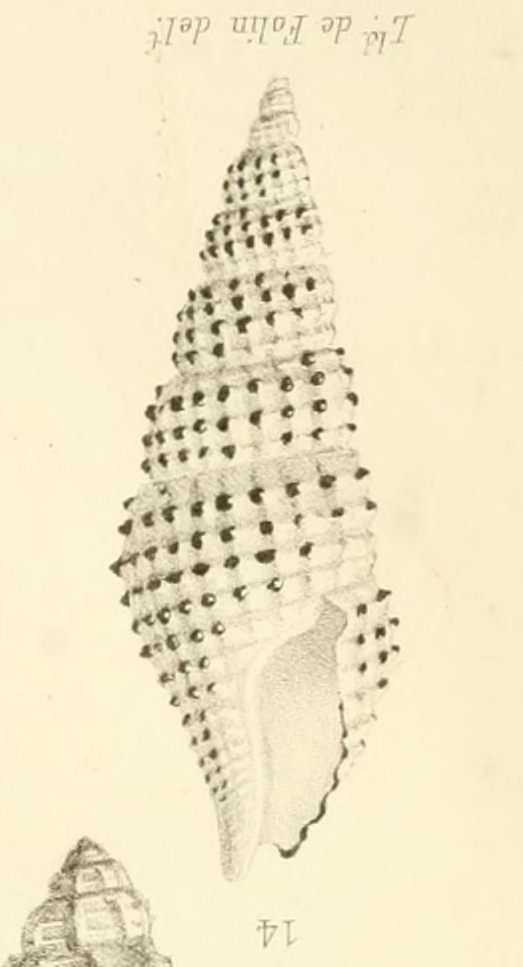
https://www.biodiversitylibrary.org/page/11247403#page/87/mode/1up
至於是什麼? 還需要考證,以下這幾顆是同一種捲管螺,但都不是 Kermia pustulosum
forum_posts.asp?TID=3390
forum_posts.asp?TID=2345
__________________
站長 ...澎湖~真是貝類的天堂 ...澎湖~真是貝類的天堂
|
| 回到本頁最上面 |
|
| |
bill
Admin Group
站長
註冊(Joined): 25-January-2003
所在地國家(Location): Taiwan
文章數(Posts): 15488
|
| 發表於: 04-February-2026 at 11:17am | IP Logged
|
|
|
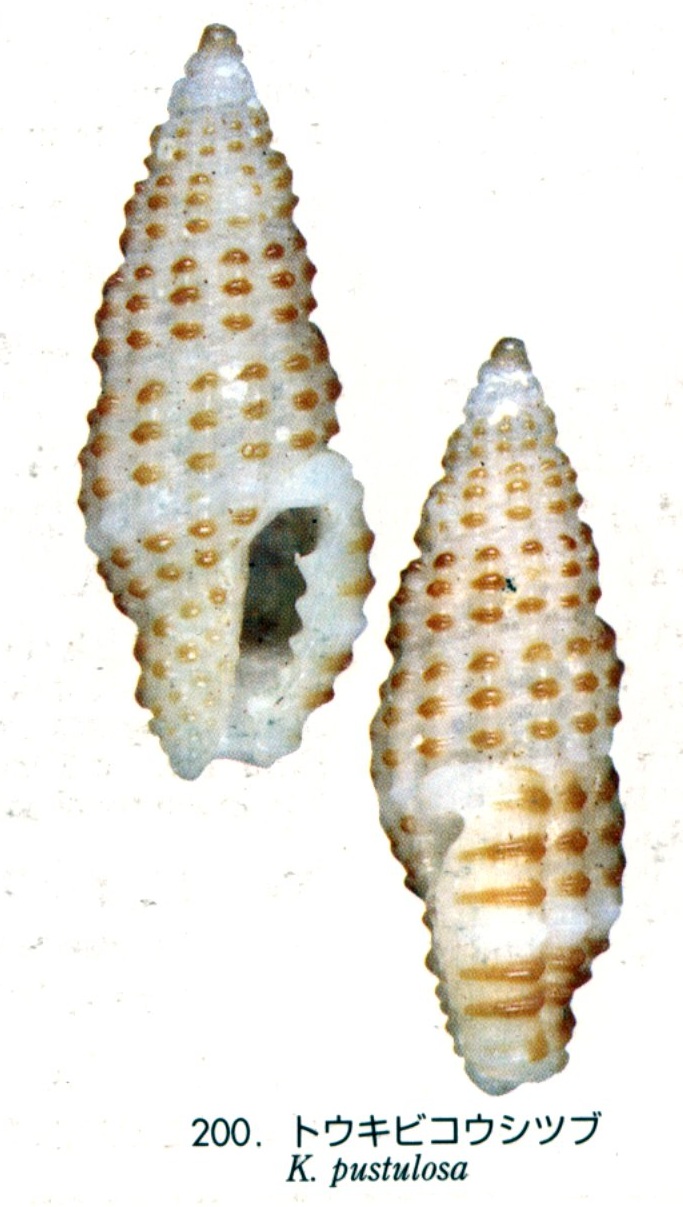
持續檢視原始文獻,上面記載說螺層共8層,這也與wangson的標本明顯不同(7層),
再看看其他網站,這個錯誤還發生在許多地方,例如:
Hardy的網站
微小貝
femorale
Worldwide Mollusc Species DataBase
就連奥谷喬司: 日本近海產貝類圖鑑,也是錯的
__________________
站長...澎湖~真是貝類的天堂
|
| 回到本頁最上面 |
|
| |
jbslms38
高級會員

註冊(Joined): 10-March-2004
所在地國家(Location): Taiwan
文章數(Posts): 2201
|
| 發表於: 06-February-2026 at 11:01pm | IP Logged
|
|
|
真的要給站長按個讚,這下標簽又要重寫了。原以為這已是板上釘釘的殼,沒想到還是被站長翻了個底朝天。佩服站長的研究精神。
|
| 回到本頁最上面 |
|
| |
bill
Admin Group
站長
註冊(Joined): 25-January-2003
所在地國家(Location): Taiwan
文章數(Posts): 15488
|
| 發表於: 07-February-2026 at 6:04pm | IP Logged
|
|
|
我大概是吃了黃醫師的口水
__________________
站長...澎湖~真是貝類的天堂
|
| 回到本頁最上面 |
|
| |
bill
Admin Group
站長
註冊(Joined): 25-January-2003
所在地國家(Location): Taiwan
文章數(Posts): 15488
|
| 發表於: 10-March-2026 at 3:26pm | IP Logged
|
|
|
無意中在網路發現一篇文章,居然和我想法類似,可見懷疑它不是只有我一人:
一、產地差很遠
二、尺寸差很多
三、形態不一樣
Kermia pustulosum is a species of sea snail, a marine gastropod mollusk in the family Raphitomidae within the superfamily Conoidea. Originally described in 1867 by French malacologist Léopold de Folin as Pleurotoma pustulosum from specimens collected in Panama Bay, it represents one of the early named taxa in the genus Kermia, established by W. R. B. Oliver in 1915. The specific epithet "pustulosum" refers to the pustulose (blister-like) ornamentation on its shell, though detailed morphological studies remain limited due to the loss of type material.
The genus Kermia comprises approximately 36 Indo-West Pacific species, characterized by small, fusiform shells with truncated bases, convex whorls, and distinctive cancellate teleoconch sculpture formed by axial ribs crossed by spiral ridges that create nodules. The protoconch is bluntly conical with 2.7–3.3 whorls, often featuring diagonal cancellation, while the aperture is narrow, about half the shell length, with a linguiform to lacrimiform anal sinus and a denticulate outer lip. K. pustulosum is considered to share these traits, though as a nomen dubium its exact shell dimensions (reported as 4–8 mm in some accounts) and coloration (light fulvous with red-tipped pustules) are uncertain and based on historical illustrations.
Distribution records for K. pustulosum indicate a presence in the eastern Pacific, including the type locality in Panama Bay, and reports in the marine biota of Chinese seas, though the latter likely stem from taxonomic confusion with similar species such as K. punctifera. It inhabits marine environments, likely on the inner continental shelf at depths of 10–130 m, consistent with the ecology of other Kermia species that dwell in sandy or muddy subtidal habitats. Some authorities have questioned the validity of the name, listing the original combination as a nomen dubium due to inadequate type material, but it is currently accepted in major databases.
Taxonomy
Classification
Kermia pustulosum is classified within the domain Eukaryota, kingdom Animalia, phylum Mollusca, class Gastropoda, subclass Caenogastropoda, order Neogastropoda, superfamily Conoidea, family Raphitomidae, genus Kermia, and species K. pustulosum. This placement positions it as a marine gastropod mollusk, characterized by a toxoglossate radula adapted for predation, typical of the Conoidea superfamily.
The family Raphitomidae encompasses small to medium-sized conoids with sculptured shells, often featuring axial and spiral ribs, and Kermia pustulosum fits within this group as a distinct species known from shallow subtidal to moderate depths (10–130 m). Within the genus Kermia, established by W. R. B. Oliver in 1915, species exhibit small, spindle-shaped (fusiform) shells with a narrow aperture comprising nearly half the shell length, and cancellate sculpture formed by intersecting ribs and cords. This genus currently includes around 28 accepted species, primarily distributed in Indo-Pacific waters, highlighting K. pustulosum's systematic context among these minute, predatory snails.
Nomenclature and synonyms
The binomial name of this species is Kermia pustulosum (de Folin, 1867).
It was originally described by the French malacologist Léopold de Folin in 1867 under the name Pleurotoma pustulosum, in his work Les méléagrinicoles: espèces nouvelles, published in the Recueil des Publications de la Société Havraise d'Études Diverses (volume 33, pages 41–112, plate 5, figure 1).
The species was subsequently transferred to the genus Kermia, which was established by Walter Reginald Brook Oliver in 1915 for small turrid gastropods from the Kermadec Islands region, reflecting a reclassification within the family Raphitomidae. Although some authorities have regarded the original combination as a nomen dubium due to inadequate type material, the name is currently accepted in major databases.
Known synonyms include Pleurotoma pustulosum de Folin, 1867 (the original combination) and Clathurella pustulosa (de Folin, 1867), the latter representing an early generic placement in the now-defunct genus Clathurella.
Description
Shell morphology
The shell of Kermia pustulosum is small and fusiform, exhibiting a spindle-shaped form with a pointed apex and a narrow aperture that comprises nearly half the shell's length, consistent with characteristics of the genus Kermia. Detailed species-specific morphological studies are limited due to inadequate type material, and the species has been considered a nomen dubium by some authorities.
The teleoconch consists of 5–6 slightly to strongly convex whorls, featuring an angular or narrow shoulder and a concave subsutural region, with the suture undulating or crenulated by rib terminations. These features align with the genus description but may not be precisely confirmed for this taxon.
Surface sculpture is cancellate, characterized by 8–16 slightly prosocline to opisthocline axial ribs per whorl, crossed by 3–12 narrower spiral ridges of nearly equal strength, forming angular to rounded nodules or pustules—small, rounded protuberances particularly prominent on later whorls, while early whorls are smoother with fine collabral striae in interstices. The base of the body whorl is constricted above a thick, convex rostrum that may bear ridges or nodules.
The aperture is narrowly elliptical to linear, with a sigmoid inner lip supporting a thin callus and weak parietal pad; the outer lip is flat to convex, often with internal denticles. The siphonal canal is short and strongly contracted, terminally expanded or parallel-sided, with a truncate, oblique end.
Size and coloration
Historical illustrations suggest a shell length of approximately 10–15 mm. A database record mentions a specimen of 4.6 mm, but its origin (Fiji Islands) is unconfirmed by major sources and may represent a misidentification.
Preserved shells appear white to pale; live coloration is undocumented in reliable sources. Information on the coloration of soft parts, such as the foot or mantle, is unavailable.
Distribution and habitat
Geographic range
Kermia pustulosum was originally described from specimens dredged in Panama Bay, eastern Pacific Ocean, suggesting an initial association with subtropical to tropical waters in that region.
Some records place the species within the Indo-West Pacific, with a checklist occurrence in Chinese seas.
Additional verified occurrences are reported from Fiji in the central South Pacific, where specimens have been collected from similar subtropical marine environments. However, the species is considered a nomen dubium by some authorities due to the lack of type material, and Indo-Pacific records may reflect taxonomic confusion or misidentifications (e.g., with K. punctifera in Asian literature). The scarcity of recent sightings beyond these localized areas—primarily from targeted shell surveys rather than widespread ecological monitoring—indicates that K. pustulosum may be rare or patchily distributed, potentially reflecting historical taxonomic confusion or limited sampling efforts in its range. This disjunct pattern between the type locality and modern Indo-Pacific records raises questions about possible range shifts or misattribution in early descriptions.
Environmental preferences
Kermia pustulosum is a demersal species inhabiting tropical marine environments of normal salinity in the Pacific Ocean. (Tucker, J.K., 2004. Catalog of recent and fossil turrids (Mollusca: Gastropoda). Zootaxa 682: 1-1295.)
Specific data on its depth range and substrate preferences remain sparse, reflecting limited ecological studies on the species. Based on records of congeners, Kermia species typically occur in shallow subtidal to moderate depths, ranging from 0 to 130 m. (Kilburn, R.N., 2009. Genus Kermia (Mollusca: Gastropoda: Conoidea: Raphitominae) in South African waters, with observations on the identities of related extralimital species. African Invertebrates 50(2): 201–229.) They are benthic, often associated with soft substrates such as sand or mud, and may also occur near coral reefs or seagrass beds.
The scarcity of targeted research highlights gaps in understanding its precise habitat requirements, particularly in relation to water temperature, oxygen levels, and associations with other marine organisms in Indo-Pacific ecosystems.
資料來源: https://grokipedia.com/page/kermia_pustulosum
__________________
站長...澎湖~真是貝類的天堂
|
| 回到本頁最上面 |
|
| |
|
|

 熱門話題
熱門話題  會員名錄
會員名錄  搜尋
搜尋  Help
Help 註冊
註冊  登入
登入 台灣貝類圖鑑討論區(http://shells.tw/forums/forum) : 迷你貝(Micromollusk)
 Topic: 北台灣貝欣賞(135)橘點捲管螺

